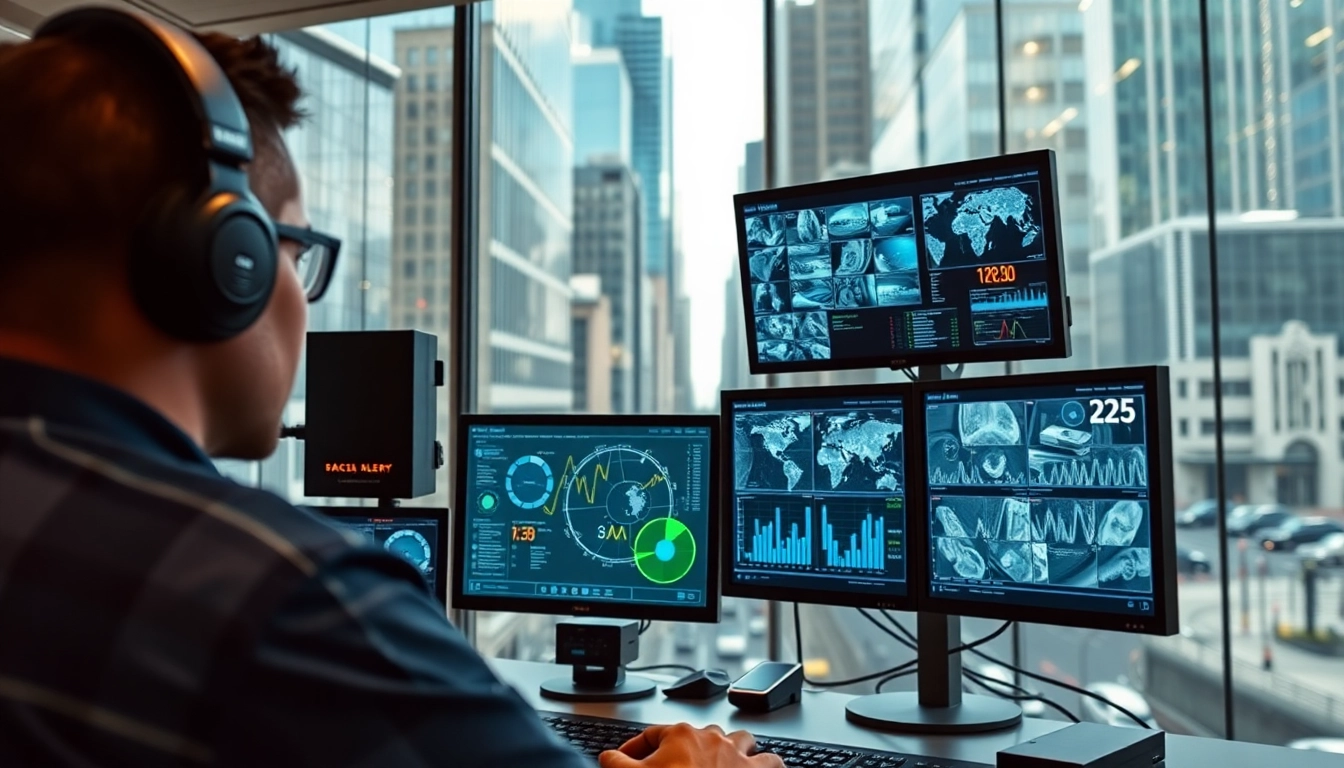
Understanding Video Surveillance Analytics
Definition and Importance of Video Surveillance Analytics
Video surveillance analytics refer to intelligent software systems that analyze video feeds in real-time to detect, classify, and respond to various activities and incidents. These systems blend advanced algorithms and artificial intelligence to convert raw video data into actionable insights, enhancing security and improving operational efficiencies across numerous sectors. The significance of video surveillance analytics lies in their ability to facilitate proactive security measures, reduce response times, and assist in crime deterrence, contributing to a safer environment in both public and private settings.
How Video Surveillance Analytics Work
The functioning of video surveillance analytics relies on several core operations, including:
- Data Capture: Cameras equipped with advanced sensors capture video footage, which is then transmitted to a processing unit.
- Real-Time Analysis: Advanced algorithms evaluate the video in real-time, identifying activity patterns, trends, and anomalies.
- Event Detection: The system can automatically detect events such as unauthorized access, unusual movements, or crowd formation, triggering alerts to operators.
- Data Reporting: Post-analysis, the system summarizes findings, generating reports that help organizations make data-driven decisions.
Key Components of Video Surveillance Analytics Systems
A robust video surveillance analytics system includes several critical elements:
- Cameras: High-definition cameras with varying capabilities are essential for capturing quality video.
- Storage Systems: These systems store vast amounts of video data securely for later analysis and retrieval.
- Processing Units: Central processing units or servers perform the analytics tasks, enabling real-time processing.
- Software: Specialized software integrates all components, allowing for user-friendly interaction and data visualization.
Benefits of Implementing Video Surveillance Analytics
Enhanced Security Measures
Implementing video surveillance analytics significantly enhances security by enabling systems to identify threats proactively. For instance, systems can analyze foot traffic in sensitive areas and alert personnel to potential breaches. By employing advanced object recognition capabilities, these systems can differentiate between benign activities and suspicious behavior, thereby improving response strategies.
Increased Operational Efficiency
Organizations can utilize video surveillance analytics to improve overall efficiency. By examining patterns in customer behavior, businesses can optimize store layouts, staff allocations, and inventory management. This data-driven approach allows for fine-tuning policies and operational strategies based on concrete analytics, ensuring improved service delivery.
Cost-Effectiveness in Long-Term Operations
Though the initial investment in surveillance technologies can be substantial, the long-term benefits outweigh the costs. By reducing the potential for theft, property damage, and liability claims, organizations save significantly over time. Moreover, analytics systems often simplify processes like incident reporting and investigations, further lowering operational overheads.
Challenges in Video Surveillance Analytics Implementation
Data Privacy and Ethical Considerations
With the rise of video surveillance analytics comes the challenge of balancing security needs with privacy rights. Organizations must address ethical considerations surrounding data collection and ensure compliance with regulations to protect individual privacy. Implementations should include clear policies regarding data retention, access, and usage to mitigate concerns and foster trust among stakeholders.
Technical Limitations and Integration Issues
Integrating new analytics systems with existing infrastructure can pose technical challenges. Organizations may face issues related to compatibility, system performance, or resource allocation. Evaluating current hardware capabilities and conducting thorough compatibility assessments prior to implementation can alleviate these issues.
Maintaining System Accuracy and Reliability
Ensuring the accuracy and reliability of video surveillance analytics systems demands regular maintenance and updates. Environmental changes or software advancements may affect system performance, necessitating prompt adjustments. Regular audits and system evaluations should be conducted to identify potential weaknesses and optimize effectiveness.
Best Practices for Video Surveillance Analytics
Regular System Audits and Updates
Periodic system reviews are essential for verifying the accuracy of analytics and ensuring systems meet evolving security threats. Organizations should schedule routine audits to assess performance metrics and update software to leverage the latest technological advancements, guaranteeing systems remain effective.
Training Personnel for Optimal Usage
Operational training is crucial for personnel who will manage video surveillance analytics systems. Adequate training on system features, data interpretation, and response scenarios enhances the effectiveness of security measures. Continuous education programs should be implemented to keep staff updated on new functionalities and best practices.
Analyzing User Feedback for Continuous Improvement
Feedback from end-users regarding system performance and usability can provide valuable insights for improvement. Engaging in regular dialogues with personnel allows organizations to understand challenges encountered and refine their systems accordingly, keeping operations streamlined and effective.
FAQs about Video Surveillance Analytics
What types of incidents can video surveillance analytics detect?
Video surveillance analytics can detect unauthorized access, loitering, crowd gathering, and other unusual activities in real-time, allowing for quick responses.
Are video surveillance analytics systems difficult to manage?
While they can be complex, effective training and user-friendly software often make management straightforward for operators.
How can video surveillance analytics enhance business intelligence?
They provide actionable insights into customer behavior and operational efficiency, helping businesses make data-driven decisions.
What industries benefit most from video surveillance analytics?
Industries like retail, transportation, and security services extensively utilize video surveillance analytics for safety and operational improvements.
Can video surveillance analytics be integrated with other security systems?
Yes, many video surveillance analytics systems can be seamlessly integrated with alarms and access control systems for holistic security solutions.