

Overview of Poker Tournament Payout Structures
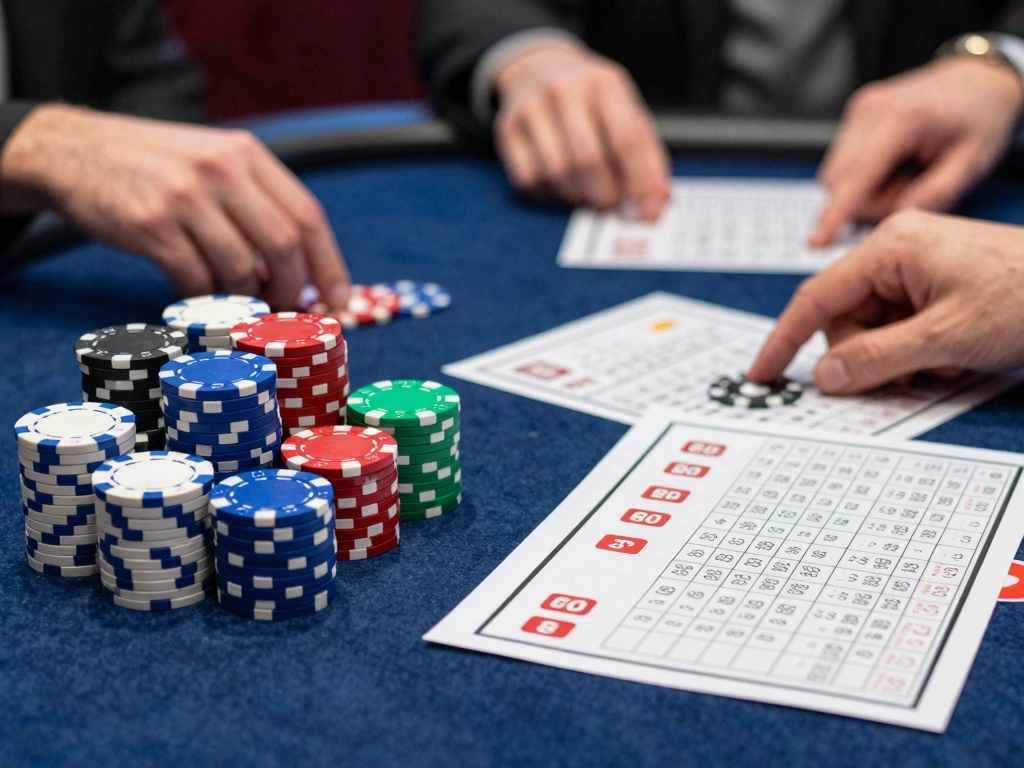
Definition of Cash Payout Structures
In the realm of poker tournaments, cash payout structures refer to the predetermined distribution of prize money awarded to players based on their finishing positions. These structures are crucial in determining how much of the total prize pool each player will receive, contingent on how well they perform in the tournament. Understanding these payout structures is essential for players, as they can significantly influence both strategy and tournament dynamics.
Importance of Understanding Payouts
Grasping the nuances of cash payout structures is vital for any serious poker player. The way payouts are structured can affect player behavior, risk tolerance, and overall strategies during the game. For instance, a top-heavy payout structure may encourage aggressive play, while a flatter structure might lead to more conservative tactics. Recognizing these patterns allows players to adapt their approach and maximize their chances of finishing in a profitable position.
Different Types of Poker Tournaments
There are various types of poker tournaments, each with its own unique payout structure. Common formats include:
- Freezeouts: Players pay a fixed buy-in and are eliminated once they lose all their chips.
- Rebuys: Players have the option to buy back into the tournament after being eliminated during a specific period.
- Bounty Tournaments: Players earn a cash reward for eliminating opponents, adding an additional layer to the payout structure.
- Satellite Tournaments: These tournaments offer entry into larger events as a prize, rather than cash payouts.
Common Cash Payout Models in Poker Tournaments
Flat Payout Structure
A flat payout structure distributes the prize pool evenly among a larger number of players. For example, in a tournament with a total prize pool of $10,000 and 100 entrants, if the top 20 players receive payouts, each would receive $500. This model is appreciated for its inclusivity, allowing more players to leave with winnings, but it can diminish the overall reward for top performers.
Top-Heavy Payout Structure
In a top-heavy payout structure, a larger portion of the prize pool is allocated to the top finishers. For instance, in a $10,000 prize pool with 100 entrants, the payout might be distributed as follows:
- 1st Place: $3,000
- 2nd Place: $2,000
- 3rd Place: $1,500
- 4th Place: $1,000
- 5th Place: $500
- 6th to 10th Place: $250 each
This structure creates a competitive environment, often leading to more aggressive play as players aim for the top spots. However, it can also lead to frustration for those who finish just outside the money.
Percentage-Based Payout Structure
Percentage-based payout structures allocate a specific percentage of the prize pool to various finishing positions. This method can vary widely, but a common example might look like this:
- 1st Place: 30%
- 2nd Place: 20%
- 3rd Place: 15%
- 4th Place: 10%
- 5th Place: 5%
- 6th to 10th Place: 2% each
Such structures offer a balance between rewarding top players and providing payouts to several other participants. They allow for a flexible approach to prize distribution, adapting based on the number of entrants and total prize pool.
Factors Influencing Payout Distribution
Number of Entrants
The number of participants in a tournament plays a significant role in determining payout distributions. As the field size increases, the total prize pool grows, allowing for more substantial payouts. Tournament organizers often adjust payout structures based on the expected number of entrants to ensure that the distribution is fair and competitive.
Tournament Buy-in Amount
The buy-in amount directly impacts the prize pool and, consequently, the payout structure. In high-stakes tournaments with larger buy-ins, the prize pool can reach significant sums, leading to more elaborate payout structures. For instance, a $1,000 buy-in with 200 players creates a $200,000 prize pool, allowing for a more extensive and potentially more rewarding payout distribution.
Prize Pool Allocation
Prize pool allocation is another critical factor in determining cash payouts. Organizers may choose to allocate funds towards various aspects of the tournament, including administrative costs, promotional prizes, or additional bonuses for special achievements (like the best player or best hand). This allocation can affect the overall payout structure and the final amounts awarded to players.
Impact of Payout Structures on Player Strategy
Adjusting Strategy Based on Payout Types
Understanding the payout structure can significantly influence a player's strategy during a tournament. In top-heavy structures, players might opt for a more aggressive style, aiming for the top spots where the payouts are most lucrative. Conversely, in flatter structures, players may choose to play more conservatively, focusing on staying in the money rather than risking elimination for a higher payout.
Risk Management in Different Structures
Effective risk management is vital in poker tournaments, and the payout structure plays a crucial role in shaping this aspect. In top-heavy structures, the potential for high rewards may justify higher risks, leading players to make moves that could be deemed reckless in other contexts. In contrast, flatter structures may encourage players to minimize risks to ensure they secure a payout, even if it means forgoing aggressive plays.
Long-term Earnings vs. Short-term Gains
Players must weigh long-term earnings against short-term gains when considering payout structures. In tournaments with top-heavy payouts, a player might focus on aiming for first place, potentially sacrificing consistent cash finishes in favor of higher-risk, higher-reward plays. Conversely, a player in a flat payout structure may adopt a more sustainable approach, focusing on regular cash finishes and building their bankroll over time.
Analyzing Specific Tournament Examples
Major Tournament Case Study
Let's analyze a major tournament, such as the World Series of Poker (WSOP) Main Event. The 2022 WSOP Main Event had a buy-in of $10,000 and attracted 8,663 players, creating a staggering prize pool of $80,782,475. The payout structure was heavily top-heavy:
- 1st Place: $10,000,000
- 2nd Place: $6,000,000
- 3rd Place: $4,000,000
- 4th Place: $3,000,000
- 5th Place: $2,000,000
- 6th to 10th Place: Over $1,000,000 each
This structure incentivizes players to take risks in the early and middle stages of the tournament, knowing that the potential rewards for a deep run are extraordinarily high.
Local Tournament Insights
In a local tournament scenario, consider a regional casino hosting a $100 buy-in tournament with 100 entrants, creating a $10,000 prize pool. The payout structure might look like this:
- 1st Place: $3,000
- 2nd Place: $2,000
- 3rd Place: $1,500
- 4th Place: $1,000
- 5th Place: $500
- 6th to 10th Place: $200 each
This reflects a moderate top-heavy structure, encouraging players to push for top positions while still providing some reward for more players. This type of payout structure is common in local tournaments, where the focus is on attracting a broad field while still rewarding skillful play.
Online Tournament Comparisons
Online poker tournaments often feature varying payout structures. For example, a popular online platform might host a $50 buy-in tournament with a guaranteed prize pool of $5,000. The payout structure could be percentage-based, rewarding the top 15% of players:
- 1st Place: 25% ($1,250)
- 2nd Place: 15% ($750)
- 3rd Place: 10% ($500)
- 4th Place: 8% ($400)
- 5th Place: 5% ($250)
- 6th to 10th Place: 2% ($100 each)
This structure allows for a reasonable payout to a good number of players, enhancing the overall player experience, especially in the online arena, where smaller buy-ins can attract larger fields.